SINGAPORE: In lower than two months into 2021, we have now witnessed greater than half a dozen tech corporations within the area asserting their plans to go public.
Among these are established Southeast Asian unicorns like Grab, Gojek, Tokopedia and Traveloka who’ve made public concrete discussions to discover new progress alternatives.
However, the preliminary public providing (IPO) ambitions of these tech unicorns, having transitioned from start-ups to the multi-billion greenback tech corporations they’re right this moment, needs to be unsurprising.
READ: Commentary: Elon Musk gambles big on bitcoin to keep Tesla going strong
After all, their companies have matured, they’ve gained important market share and they’re trying to shore up their steadiness sheets for the following phases of their progress.
Yet, the fever to go public will not be unique to established unicorns. Smaller pre-unicorn scale-ups from the area have additionally began touting comparable plans.
Tech pundits would readily cite Zilingo and Ruangguru as pre-unicorn scale-ups with critical ambitions to go public. Most lately, Carro which noticed robust returns in 2020 made public their ambition to checklist inside a two to three year time-frame.
With traders having pumped billions into every of them, it comes as no shock that strain is mounting to ship an exit.
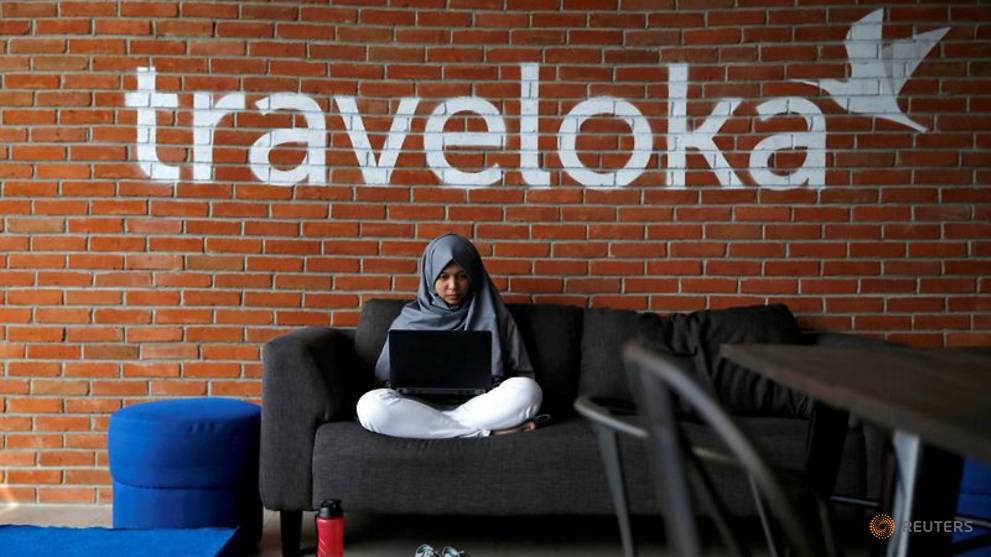
FILE PHOTO: An worker of Traveloka works on the firm’s headquarters in Jakarta, Indonesia, August 2, 2017. REUTERS/Beawiharta/File Photo/File Photo
Investments from enterprise capital funds into tech start-ups as early as 2013 are starting to mature, so many principals may be banking on 2021 to be a blockbuster year with listings bringing wholesome exits to their respective funds.
As early as 2019, corporations similar to Traveloka and Tokopedia have been in critical talks with funding banks for a twin itemizing within the US and within the area, in accordance to a number of media stories.
HOW 2020 CHANGED MARKET CONDITIONS
However, poor financial situations, and weak market sentiments – no thanks to Uber Technologies’ stomach flopped IPO and WeWork’s disastrous try to checklist the second it filed its prospectus — meant that valuations and liquidity weren’t in favour of a itemizing.
Then got here the year that was 2020, because the pandemic ravaged the worldwide economic system, shut down companies, and introduced worldwide journey to an abrupt and virtually full standstill.
The Southeast Asian tech corporations weren’t spared. Smove, a automobile leasing firm based in Singapore, noticed its income plummet 85 per cent, forcing it to liquidate its operational arm and promote its mental property.
READ: Commentary: The gig economy – a surprise boost from the pandemic and in Singapore, it’s not going anywhere
READ: Commentary: Don’t be too quick to write off the sharing economy, even with COVID-19
Stoqo Teknologi Indonesia and Airy, each Indonesian start-ups, ceased operations in 2020. Tokopedia, Grab and Gojek all carried out employees and wage cuts, as Traveloka, being within the enterprise of journey, additionally took a enormous hit.
Despite all of these setbacks, 2020 revealed the market’s urge for food for investing within the know-how area, particularly because the international economic system was fraught with uncertainty, and conventional brick and mortar companies revealed their vulnerability within the face of change.
SEA Limited, in all probability one of the few publicly listed choices to spend money on know-how in Southeast Asia, noticed astronomical progress in 2020, with its share value rising by 400 per cent.
In February, to capitalise on the recent marketplace for tech shares, Softbank publicly urged its high-profile portfolio corporations in its US$100 billion Vision Fund – similar to China’s Bytedance and Didi Chuxing and Southeast Asia’s Grab – to speed up plans to checklist.
If something, 2020 was a year of reckoning for Southeast Asian tech corporations.

SoftBank’s bottoom line has been boosted by a surge in inventory markets AFP/CHARLY TRIBALLEAU
Those who survived, got here out leaner and stronger. Grab noticed its third quarter income bounce again to 95 per cent of pre-COVID ranges, and closed a US$2 billion time period mortgage facility in February 2021.
Gojek managed to safe a US$1.2 billion spherical in March 2020 and raised a further US$525 million in June and November. It then went on to purchase a 22 per cent stake in Indonesia’s Bank Jago in December.
Traveloka’s Vietnam enterprise has surpassed pre-COVID-19 ranges, is almost again to regular ranges in Thailand, and is at half of pre-COVID ranges in Indonesia.
RED HOT YEAR
On the again of such restoration, 2021 is shaping up to be a crimson scorching year within the Southeast Asian tech scene creating enthusiasm for listings. The market is buzzing with murmurs of potential plans.
READ: Commentary: A Gojek-Tokopedia merger has ramifications for regional unicorns including Grab and Sea
Apart from the strain to exit and powerful market sentiments, a pent-up submit pandemic urge for food may account for some half of the robust impetus to go public.
For instance, final year noticed a surge of newly-listed particular objective acquisition corporations (SPACs) within the US.
SPACs are particular objective shell corporations listed, with out belongings or enterprise actions, so as to purchase a enterprise.
The acquisition is often funded with a mixture of money and shares, and since the valuation of the goal is normally a minimum of 4 to 5 instances greater than the SPAC, the homeowners of the goal will normally find yourself being the bulk shareholder of the listed SPAC due to the consideration paid in shares, therefore why it’s generally known as a “reverse merger”.
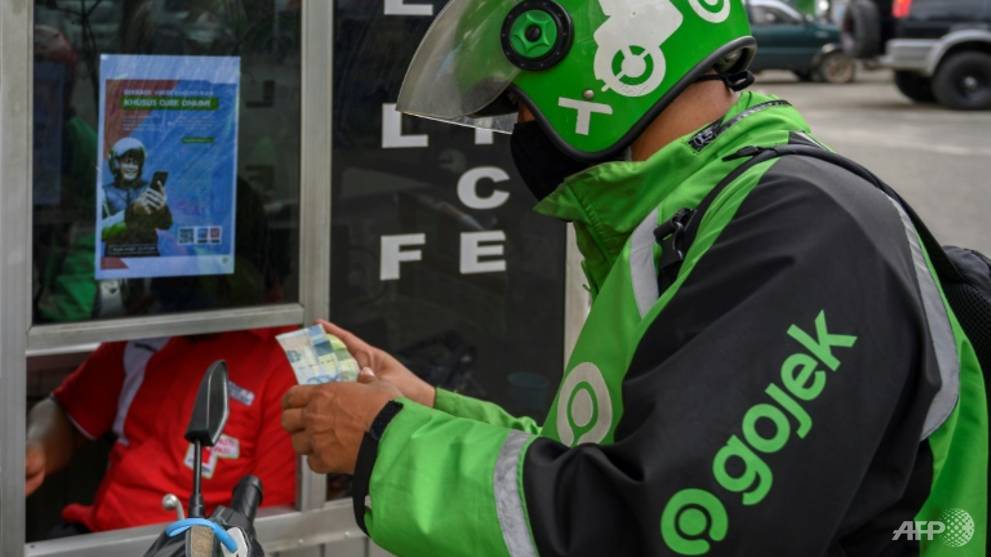
Founded in 2015, Gojek began as a bike taxi app earlier than shortly turning into a ‘super-app’ AFP/BAY ISMOYO
Interest in SPACs amongst Southeast Asian unicorns has surfaced. Tokopedia was in talks with Richard Li and Peter Thiel’s Bridgetown Holdings SPAC however the focus has now shifted to its potential merger with Gojek.
The emergence of SPACs might have performed a half in re-energising these unicorns’ itemizing plans, including enthusiasm to the 2021 IPO scene.
Unlike a conventional IPO, SPACs supply a a lot sooner and fewer cumbersome route to going public. The transaction danger is decrease, and the time, effort and value wanted for a SPAC itemizing is way lower than a conventional IPO.
READ: Commentary: Singapore’s game plan to court more billionaires to come here is paying off
These make SPACs a rather more enticing possibility for itemizing for tech corporations.
As they originate from US capital markets, SPACs additionally match properly into Southeast Asian tech corporations’ IPO plans, enabling them to obtain the sort of valuation and liquidity extra aligned with their expectations, than itemizing in Southeast Asia alone.
For the SPACs, Southeast Asia provides them an rising and thrilling alternative, with potential for progress.
The tech corporations of Southeast Asia are enticing as they’re a half of the quick rising digital economic system of the area.
A report revealed by Temasek, Google and Bain & Company exhibits that with a inhabitants of over 650 million, Southeast Asia’s digital economic system is poised to develop to US$300 billion (S$415 billion) by 2025, 3 times its present annual dimension, given the area’s comparatively younger inhabitants and growing Internet entry. It is due to this fact a horny sector for traders looking for a excessive progress portfolio.
It is due to this fact a horny sector for traders looking for a excessive progress portfolio.

Children carrying face masks play with a smartphone amid the unfold of coronavirus illness (COVID-19) inside a home at a densely populated space in Jakarta, Indonesia, April 1, 2020. (Photo: Reuters/Willy Kurniawan)
So is 2021 a good year for Southeast Asian tech corporations to checklist?
Even with the excessive ranges of curiosity, the success of such plans and eventual IPOs will enormously rely on the worldwide economic system’s pace of restoration, and whether or not these corporations can flip their companies worthwhile.
Investors are more and more trying in the direction of investments turning a revenue, slightly than for these corporations to appeal to extra traders.
READ: Commentary: Why aren’t tech unicorns listing on the SGX?
The pandemic has given these corporations a likelihood to trim extra fats, and switch in the direction of a extra worthwhile working mannequin. With vaccines rolling out all around the world, the economic system seems on monitor for a robust restoration.
Gear up then as the following Southeast Asian tech itemizing shouldn’t be distant.
Joel Shen is a Partner within the Corporate group at Withers KhattarWong. Leong Chuo Ming is a Partner within the Corporate group at Withers KhattarWong. Gabriel Li is an Associate within the Corporate group at Withers KhattarWong.
Read More at www.channelnewsasia.com
source https://infomagzine.com/commentary-why-a-bumper-crop-of-southeast-asian-tech-unicorns-look-set-to-ipo-this-year/


No comments:
Post a Comment